
The Laavan as a Spiritual Path: The Journey of Guru Ram Das Ji
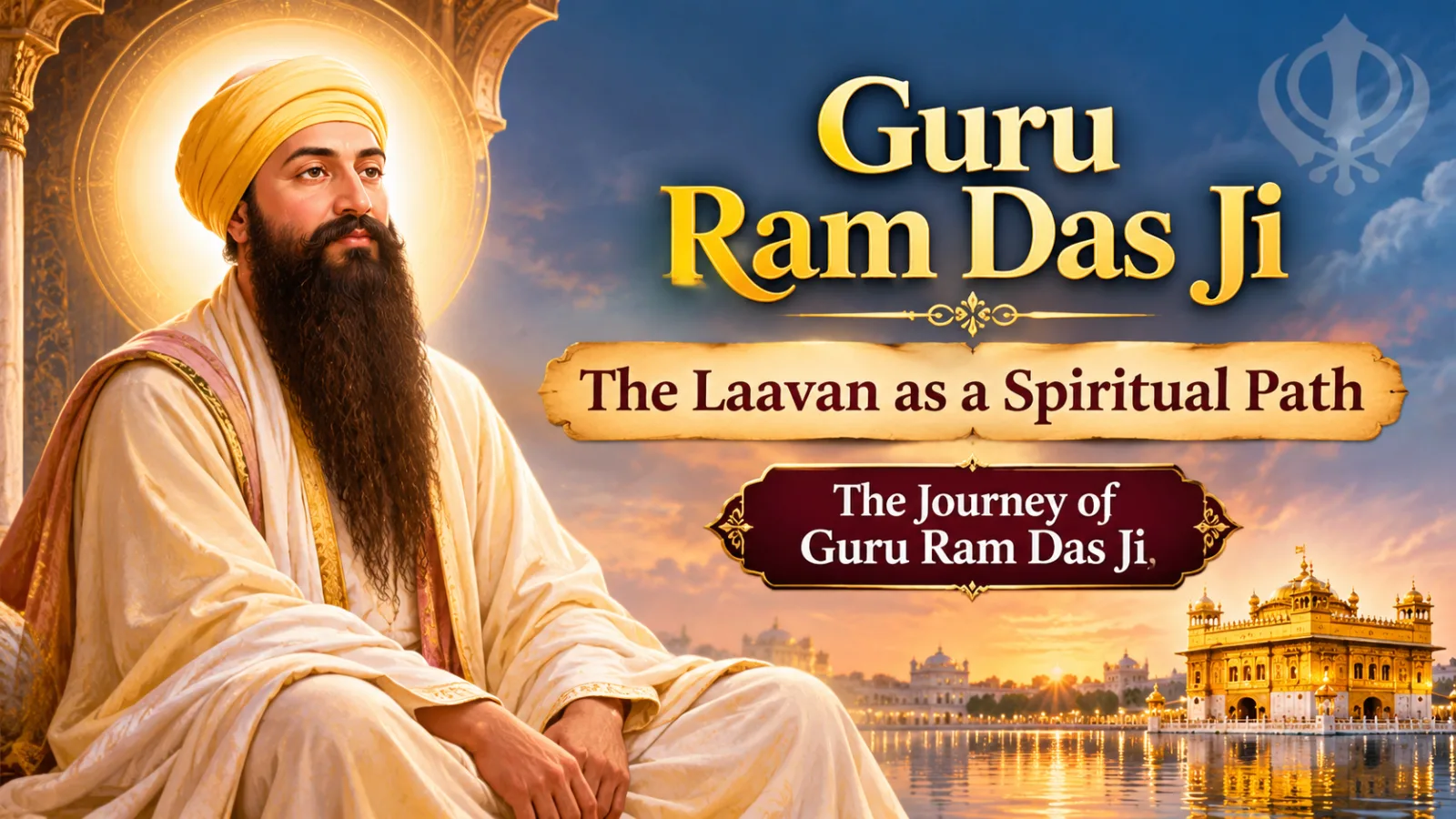
With insights from Sikh scholar S. Harpreet Singh Khalsa (Australia)
It's easy to see the Laavan as the part of the ceremony where the marriage "happens." But in a recent MeetSanjog video, Sikh scholar S. Harpreet Singh Khalsa explains that they say much more than that, and that the clearest way into them is through the life of the Guru who wrote them.
Most of us have sat through an Anand Karaj at least once. The couple walks around Sri Guru Granth Sahib Ji four times, the ragis sing, and the Laavan are over in what feels like a few minutes.
The Laavan are the bani of Guru Ram Das Ji
The four Laavan are the bani of the fourth Guru, Guru Ram Das Ji. As S. Harpreet Singh Khalsa puts it, if you sit with all four, read their meaning and then hold them up against the Guru's life, you start to see his own story in them. The Guru isn't only telling a couple what to do. He is describing a road he walked himself.
The first step is transformation
The first Laav opens with:
ਹਰਿ ਪਹਿਲੜੀ ਲਾਵ ਪਰਵਿਰਤੀ ਕਰਮ ਦ੍ਰਿੜਾਇਆ ਬਲਿ ਰਾਮ ਜੀਉ ॥
Har pahilarri laav parvirti karam drirrhaaiaa bal raam jeeo
Parvirti is the key word. It points to change, to the moment a person says, "I am being transformed." The first round isn't a formality. It is the start of becoming someone new.
From Bhai Jetha to Ram Das
Before he became Guru, Guru Ram Das Ji was known as Bhai Jetha Ji.
Jetha means the eldest or the elder one. Some people translate it simply as "the eldest son," but in everyday Punjabi it carries the broader sense of seniority. You hear it at home: when a woman marries into a family, she calls her husband's elder brother her jeth.
On his journey toward Nirankar, Bhai Jetha became Ram Das, the servant of Ram. The name moved from a word about status and being the elder to a word about humility and service. That change in his name tells you something about the change in the man.
A journey written down for all of us
The Laavan are, in a sense, Guru Ram Das Ji documenting that journey. He transformed himself first, and then he put the path into bani.
The same change shows up in three places at once:
- His name went from Jetha to Ram Das.
- His bani, the Laavan, walks step by step through that change.
- His life was lived as a daas, a servant of the Divine.
Centuries later, that bani still guides us.
What this means for a couple
When a couple takes their Laavan, they aren't only promising things to each other. They're stepping onto the same path the Guru walked: letting go of the old self, ego and the need to be "the elder" or the one in charge, and growing into a life of service and humility.
So the next time you're at an Anand Karaj and the first Laav begins, think of Bhai Jetha becoming Ram Das. A marriage built on that kind of change has the strongest foundation there is.
New to the Laavan? Read our guide to Anand Karaj: The Sikh Way of Marriage.
Looking for a partner who shares these values? MeetSanjog is a Sikh matrimony app made for people who take Anand Karaj to heart. Download the app or visit meetsanjog.com.